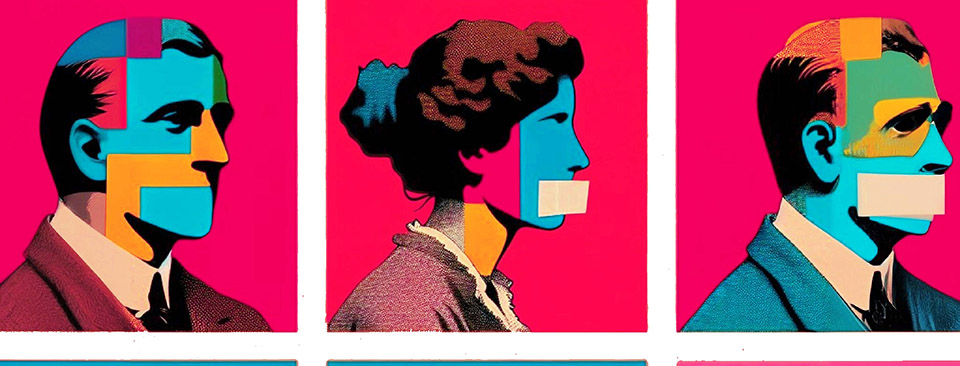
Jury, service?
The Supreme Court’s judgment in Higgins marks a historic watershed in defamation law – and its implications contradict the grounds advanced in support of the abolition of trial by jury in defamation cases, argues Mr Justice Bernard Barton
While most of the proposals contained in the Defamation Bill 2024 are to be welcomed, the same cannot be said for the proposal contained in section 3, which constitutes a direct assault on one of the oldest civil rights known to the law: the right to trial by a jury of one’s peers – a right considered so important as the surest means of protecting the civil liberties of the citizen that it was enshrined in the Magna Carta.
If enacted, the proposal would not only strip the citizen of the right to choose the mode of trial by which the facts of a case are to be decided – whether by judge and jury or by a judge alone – but would also remove the public from participation in the administration of justice, which is wholly inconsistent with the democratic principles upon which our system of justice is constructed.
While the proposal is presented as a mere procedural change through the simple expedient of dispensing in the future with jury trial in High Court defamation proceedings, the means by which this objective is to be achieved is through the total abolition of an ancient legal right that has been an integral part of the common-law system for over 800 years.
It follows that dispensing with the right to trial by jury would represent a fundamental change in the law – the consequences of which, for the administration of justice in this area of law, are profoundly undemocratic.
The concept of trial by a jury of one’s peers, whether for serious criminal offences or for civil wrongs, is designed to ensure impartiality in the decision-making process of a case and to engender public confidence in the administration of justice – an objective achieved through the random selection of 12 citizens, constituted as a jury, whose function it is to find the facts of a case on the evidence they see and hear during the course of a trial.
Jury trials and democracy
The doctrine of the separation of powers between the three branches of government – the legislature, the executive, and the judiciary – is a common feature of any democratic state founded on the sovereignty of the people.
The participation of the people in the administration of justice is no less important than the right to participate in the election of those who are to represent them politically, whether at local, national, or international forums.
Participation is achieved through the institution of trial by jury, a mode of trial that evolved as part of the common law in Ireland and in other democratic states sharing the common-law system.
Above all else, the involvement of 12 impartial citizens in the decision-making process of a case represents a quintessential expression of our democracy.
Purpose of trial by jury
The purpose of trial by jury is to protect the litigant from the risk of judicial caprice, to place in the hands of the public that share of the administration of justice that it deserves, and to prevent the encroachment of more powerful and wealthy citizens and other vested interests.
Tested throughout centuries, this mode of trial has been found to act as the most effective bulwark against the erosion of our civil liberties, which the proposal as currently constructed will entirely dismantle.
It is ironic, is it not, that in an era where the right to choose is recognised and respected, the proposal seeks to remove the litigant’s right to choose the mode of trial by which the facts of a serious case in defamation are to be decided!
Fundamental rights
It is repeatedly claimed by those advocating abolition that the retention of the right to trial by jury in defamation cases represents an illogical anachronism that should be swept away in circumstances where the right to trial by jury has already been abolished for most, if not all, other civil wrongs, and in which cases are tried by judge alone – a claim that is as factually incorrect as it is legally wrong.
The fundamental rights of the citizen particular to the individual guaranteed by the Constitution – specifically, the rights to liberty, freedom of expression, good name, bodily integrity, an ownership of property, including the inviolability of the home – are among a panoply of other civil rights recognised by law that may be vindicated through trial by jury.
Indeed, apart from the restriction of the right to jury trial in damages claims for accidentally caused personal injuries brought about by the 1988 Courts Act, all actions commenced in the High Court for civil wrongs, recognised by law at Independence, carry a legal entitlement to trial by jury as of right.
Apart altogether from stripping the citizen of the legal right trial by jury in a serious case of defamation, and removing the public from involvement in the administration of justice in such cases, the proposed abolition would create an illogical and inconsistent anomaly whereby, of all of the civil rights open to vindication by jury trial, only in defamation would the citizen be compelled to have the case decided by a judge sitting alone without a jury.
Furthermore, Ireland would become an outlier among other common-law countries, where there is either an entitlement, as of right, to jury trial in defamation cases or where such trial may be ordered by a court on application, in the interests of justice.
Among the most prominent of these are Canada (except in Quebec, which has a civil legal system), most states in Australia, New Zealand, the USA and the UK, including Northern Ireland (on application).
Review of the Defamation Act
The proposed abolition in serious defamation cases is founded on the conclusions reached (and a recommendation made) in a report of a review of the Defamation Act 2009 carried out by the Department of Justice. The Government accepted the recommendations made and published the report in March 2022.
Several arguments were advanced in support of the recommendation to abolish the right to trial by jury:
- The likelihood of disproportionate and unpredictable awards of damages will be reduced,
- Reduction in duration of hearings and the legal process, and the
- Consequential reduction in court delays and legal costs.
These arguments are part of the report narrative that are repeated by ministers when speaking publicly on this topic, most recently by the Minister for Law Reform when moving the second stage of the bill. They also feature in the press release accompanying the publication of the bill.
The seriousness of the consequences of abolition for the administration of justice in this area of law calls for a thorough examination of these claims.
The suggestion by ministers that there is a likelihood of a disproportionate award of damages in a defamation case tried by a jury is not borne out by an examination of appeal decisions heard under the Defamation Act; indeed, the number of successful appeals on the ground of disproportionality can be counted on the fingers of one hand.
Such cases represent a tiny minority of all cases heard by juries under the 2009 act – a fact conveniently unrecognised and almost always overlooked.
Supreme Court decision
So, too, is the decision of the Supreme Court in Higgins v Irish Aviation Authority, delivered one month after the publication of the report. The judgment of the court in Higgins marks a historic watershed in defamation law, the implications of which are directly relevant to the grounds advanced in support of abolition.
The court not only reversed the previous practice whereby it was not permissible to give guidance to a jury on damages by reference to monetary values or previous awards in similar cases, but has also set out categories and ranges of damages to be applied in future cases for defamation (see ‘Defamation law developments’, William Fry).
The express purpose of the guidance is to ensure an award of damages that will be proportionate to the wrong/injury suffered in the circumstances of the particular case, the first objective for which abolition is advanced as necessary, but which the Supreme Court has already addressed.
The significance of Higgins, therefore, is that it sweeps away the factual and legal premise on which abolition rests. Not only has the issue of proportionality been comprehensively dealt with, but so too the issue of predictability.
Henceforth, it will be possible to predict the likely range of damages within which a case will fall by reference to the Higgins categories of damages and guideline/value parameters.
Court of Appeal decision
It is particularly significant in the context of this debate that, in reaching its decision, the Supreme Court unanimously overturned the judgment of the Court of Appeal in Higgins.
The reversal is significant in this context, because the report of the review on which abolition rests had highlighted and emphasised the Court of Appeal’s decision therein as a recent example to illustrate the risk of disproportionate awards by juries in serious cases of defamation.
Furthermore, not only has the Court of Appeal decision in Higgins been reversed, but it is evident from the report that the review also considered and took account of, in reaching its conclusions and recommendations, decisions in other defamation cases involving disproportionate awards – cases that had nothing to do with the Defamation Act 2009 but had been decided under the Defamation Act 1961, long since repealed.
It follows that, not only does the proposal rest on a factual and legal framework that is factually and legally flawed, but it has also been superseded by a fundamental development in the law that provides appropriate and necessary guidance to a court on the assessment of an award of damages in future cases of defamation.
In this regard, it is pertinent to observe that the guidelines are being successfully applied and are working (see ‘Supreme Court guidelines’ panel).
Applying the guidelines in Gordon v Irish Racehorse Trainers’ Association, the Court of Appeal unanimously upheld the verdict and award of the jury.
Joint Committee recommendation
In the exercise of the statutory powers conferred upon it, the Oireachtas Joint Committee on Justice scrutinised the scheme for a new Defamation Bill, published by the Government in March 2023.
Having invited and heard submissions from all interested parties, and having considered the judgment of the Supreme Court in Higgins, not only did the committee unanimously recommend the retention of the right to trial by jury in High Court defamation proceedings, but it also adopted a recommendation made previously on the issue by the Law Reform Commission that the final word on damages should be left to the trial judge.
Notwithstanding, and for reasons that have never been explained, neither recommendation was accepted by the Government, nor have the responsible ministers engaged with the decisions of the Supreme Court in Higgins or the Court of Appeal in Gordon.
Given the importance of the issue, it is to be expected that the passage of the bill through the Oireachtas will not only afford ample opportunity to address these questions, but also the opportunity to reflect on the fundamental developments material to the proposal that have taken place since the publication of the report on which the proposal is based, developments that render the proposal nugatory.
Delays and costs
Insofar as there were delays in having jury trials in defamation cases heard, this had nothing whatsoever to do with the fact that the cases were jury actions, but rather was totally due to the lack of resources and failure to appoint a sufficient number of judges to deal with the enormous increase in court business, particularly over the last two decades.
Despite appointments and additional resources in recent years, Ireland has the lowest judge to population ratio in the EU.
The recent welcome increase in the number of judges appointed to all courts has significantly reduced delays in court lists, including the High Court civil jury list – a development that renders the claim of delay in defamation hearings without substance.
With regard to the claim that the length of the litigation process and legal costs will be reduced by abolition of jury trial, it should not be overlooked that one of the longest defamation trials in recent times was a case tried by judge alone: the trial lasted 29 days.
It is in the nature of defamation law that, in serious cases, trial duration can be protracted for reasons other than because the case is one tried with a jury.
It is also not generally appreciated that, for reasons that have been explained in many judgments of the superior courts, the judgment of a single judge – whether in a civil or criminal case – does not enjoy the same respect on appeal as the verdict of a jury, the latter attracting a degree of respect almost approaching one of sanctity, on the ground that it represents the combined wisdom of 12 impartial citizens.
Consequently, it is extremely difficult to overturn a jury verdict on appeal, much more so than the decision of a single judge.
There is well-documented historical and currently available evidence that contradicts the claims being made by those advocating abolition – that the duration of the litigation process and legal costs will be reduced by the removal of the right to jury trial in defamation.
Personal-injury cases
The historical evidence is to be found in the consequences that followed the abolition of the right to trial by jury in personal-injury cases brought about by the Courts Act 1988.
Awards of damages increased, and the number of appeals from ‘judge-only’ decisions rose exponentially. The relevance of this fact is that, instead of delays in court hearings, the length of the litigation process, and legal costs being reduced as a consequence of abolition (a claim made then as now), the exact opposite occurred.
However, one does not need to go back to the 1990s and 2000s in search of evidence of what is likely to happen in the event of abolition. Similar claims were made in England and Wales before the Defamation Act 2013 came into force, since when legal costs per day in the London High Court are now higher than at any time, a fact well illustrated by a number of recent public high-profile cases.
Test of time
The right to jury trial, whether for serious criminal offences or civil wrongs, has stood the test of time spanning centuries, and has yet to be surpassed as the surest means of protecting our civil liberties.
Significantly, as there is evidence that the guidance/ value parameters set out by the Supreme Court in Higgins are working, there is no plausible reason to proceed with the abolition proposal.
If no other reason than out of respect for the decision of the court in Higgins, a reasonable time should be given for the guidance/value parameters to bed in, and for the consequences through the verdicts in a sufficient body of cases to be subjected to review in due course.
Indeed, if considered appropriate, there is no reason why the guidance could not be placed on a statutory footing, as has happened with the guidelines drawn up by the Judicial Council for personal-injury cases.
Furthermore, the unanimous and meritorious recommendation of the Oireachtas Joint Committee on Justice could be accepted and implemented, retaining the jury as the tribunal of fact, but placing in the hands of the trial judge the final decision on the award of damages.
In the final analysis, however, the issue essentially boils down to which mode of trial best represents democratic principles in the legal system, and is most likely to protect and vindicate the civil liberties of the citizen.
The deep concerns and public opposition expressed by the Irish Council for Civil Liberties regarding the proposed abolition of jury trial in defamation should serve as a timely warning of the negative consequences that proceeding with the proposal will engender. There is still time to stop.
Mr Justice Bernard Barton, retired, is former head of the Civil Juries Division of the High Court.
FOCAL POINT
SUPREME COURT GUIDELINES
Value parameters on damages in defamation
The following general categories of damages in defamation were set out by the Supreme Court in Higgins.
- Band/parameter 1: Range of damages for cases of very modest defamation: €0 to €50,000
- Band/parameter 2: Range of damages for cases of ‘medium’ defamation: €50,000 to €125,000
- Band/parameter 3: Range of damages for cases of serious defamation: €125,000 to €199,000
- Band/parameter 4: Range of damages for cases of very serious defamation: €200,000 to €300,000
- Exceptional cases: To these four general categories may be added truly exceptional cases of defamation, attracting damages in excess of €300,000.
LOOK IT UP
CASES:
- Gordon v Irish Racehorse Trainers Association [2020] IEHC 425
- Gordon v Irish Racehorse Trainers Association 2022 [2022] IECA 303
- Higgins v Irish Aviation Authority [2022] IESC 13
LEGISLATION:
LITERATURE:
- ‘Case procedure: New Zealand’, Ali Romanos (Defamation Update)
- ‘Defamation and privacy law in Australia’, Patrick George (Australia Media Law Guide, Carter-Ruck)
- ‘Defamation law developments’ (including Categories of Defamation General Damages Awards), Paul Convery (William Fry, 25 March 2022)
- Increasing the Number of Judges in Ireland, Rebecca Halpin (senior parliamentary researcher [law], Library and Research Service, 17 May 2023)
- ‘Minister Harris publishes draft legislation to reform Ireland’s defamation laws’ (Department of Justice, 28 March 2023, updated 29 March 2023)
- ‘Q&A: Defamation claims in Canada’, Benjamin Fuhrmann, Hugo Saint Laurent, Justine Kochenburger, Mathieu Piché-Messier and Natalie Kolos (Borden Ladner Gervais LLP), Lexology, 10 June 2024)
- Report of the Review of the Defamation Act (Department of Justice, 2009)
- Report on Pre-Legislative Scrutiny of the General Scheme of the Defamation (Amendment) Bill (Joint Committee on Justice, September 2023)
- ‘The final chapter – Depp v Heard and jury trials in England & Wales’, Kevin Modiri (Nelsons Law, 7 June 2022)
- ‘The use of juries in defamation proceedings in America and Australia’, Nathan Buck (Kennedys, 27 October 2022)