IPS ‘fighting losing battle’ on overcrowding
The Irish Penal Reform Trust (IPRT) says that its latest report on the prison system paints “the starkest picture to date”.
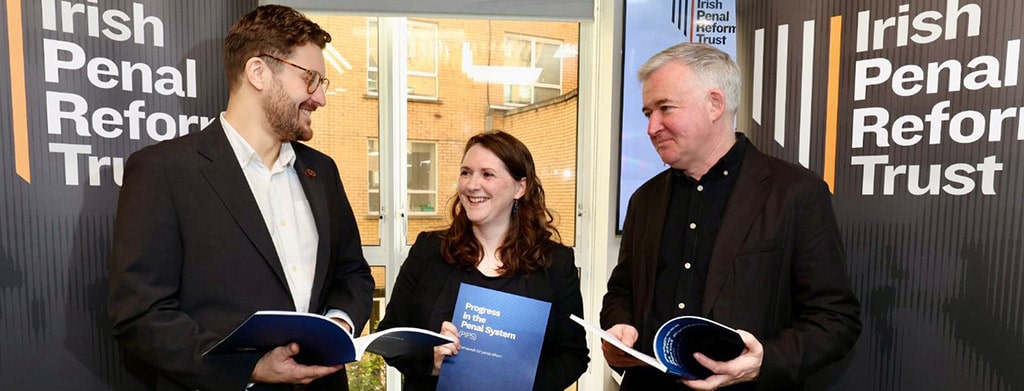
The trust today (2 December) launched its 2024 Progress in the Penal System (PIPS) report – its seventh edition.
The organisation says that the report shows a prison system that is “overwhelmed, overstretched, and unable to uphold the fundamental rights of many people in its care”.
Deterioration in 11 areas
The report assesses how Ireland’s penal system is performing against 35 human rights-based standards.
While it finds progress in three areas – education and training, political and civic participation, and parole – it reports regress in 11 standards.
The areas where it finds a deterioration of standards include:
- Safe custody limits,
- Humane prison conditions,
- Pre-trial detention,
- Time out of cells,
- Safety and security, and
- Use of force and restraints.
There was no change in seven standards, while nine were described as ‘mixed’.
Prison population hit 5,000
The report notes that the prison population reached 5,000 for the first time in June 2024, with an average daily population of 4,941 by the end of the year – well above the 4,531 prison spaces available.
IPRT executive director Saoirse Brady said that the situation had continued to deteriorate this year, with more than 5,700 people in a system that has beds for 4,702 people.
The report says that 213 prisoners were sleeping on mattresses by the end of last year, while cells designed for one person are “routinely” holding two or three.
It adds that this creates “degrading conditions” and fuels tension.
The report also shows that 31 people died in custody or shortly after release in 2024.
Building ‘not the answer’
The PIPS report makes several recommendations for addressing overcrowding, but warns that building more prison spaces is not the answer.
It urges penal reform to be treated as a cross-Government responsibility – not solely the remit of the Irish Prison Service (IPS) and the Department of Justice.
The report also calls for the incorporation of the principle of prison as a last resort into legislation through enacting the Criminal Justice (Community Sanctions) Bill 2014.
Other recommendations include more investment in community sanctions and alternatives to prison, investment in supports for mental-health services and addiction, ratifying the Optional Protocol to the UN Convention against Torture (OPCAT), and enacting the Inspection of Places of Detention Bill.
‘Political will’
Brady said that, while the IPS had made progress in several key areas, it was “fighting a losing battle” against overcrowding in a system that was “at breaking point”.
"Solutions to these challenges lie in an effective community-sanctions regime, alternative justice pathways, and delivering meaningful rehabilitation and support within prisons,” she stated, adding that this required political will and co-ordinated action across Government.
Brady stated that recommendations made by oversight bodies, as well those in Department of Justice and IPS policy reviews and assessments, provided “a clear roadmap” for improvement.
“Many of these recommendations are long-standing and should have been implemented sooner, long before we entered crisis mode, but they have now reached a critical and unsafe point,” she stated.