
Resources

Policing Expenditure |
|
|
Ireland’s policing budget has increased every year from 2019 to 2026, from €1.79 billion to €2.59 billion. This is an overall increase of €800 million, or 45%. In Budget 2026, policing was allocated 42% of the total justice budget of €6.17 billion. Ireland’s per capita spend on policing (€437.44) was 28% higher than the EU average (€342.37) according to the most recent year for which data are available (2023). Traffic light indicator: Red |
|
Number of Gardaí |
|
|
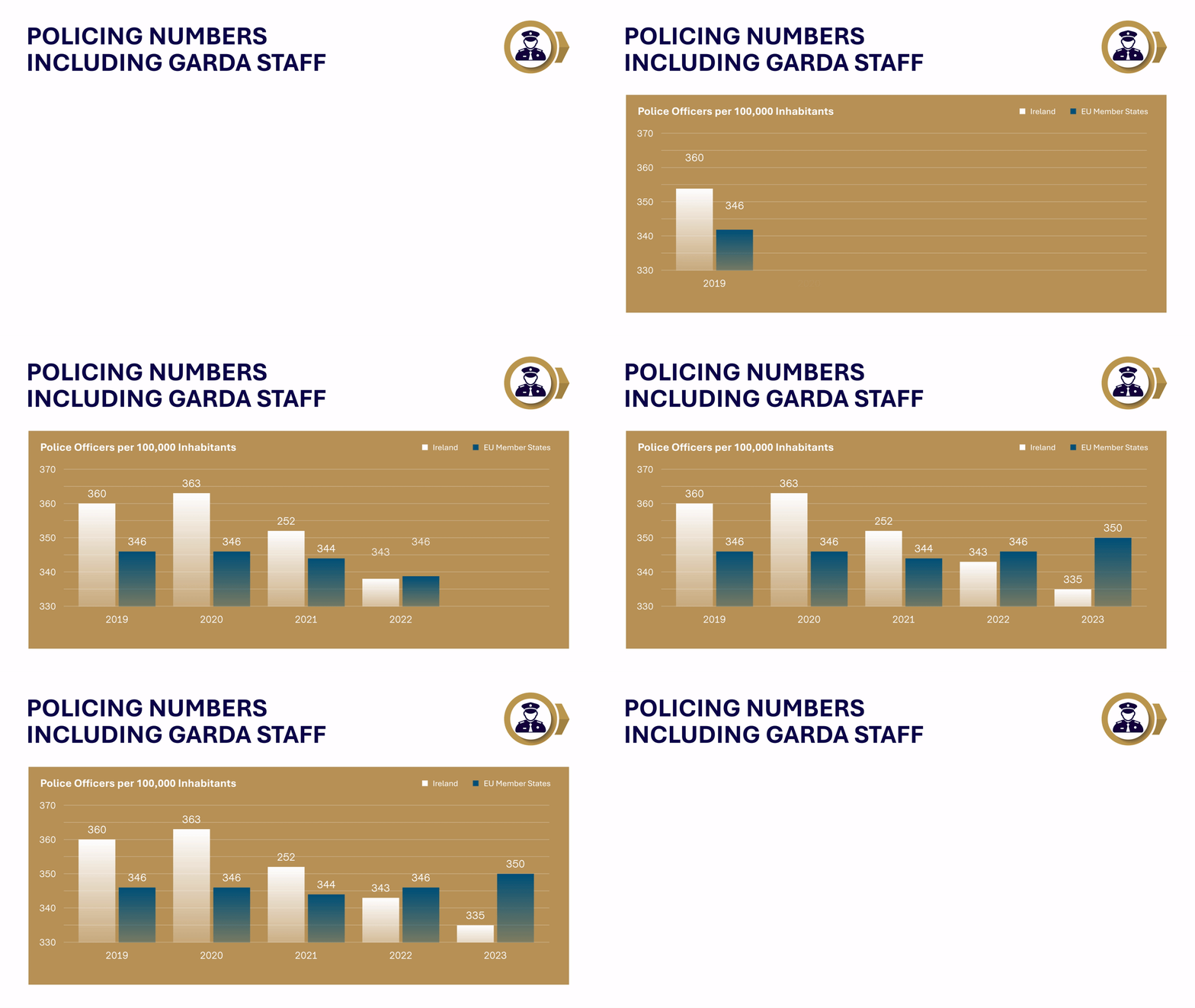
The number of Gardaí decreased over the period studied. In 2024, there were 14,191 uniformed Gardaí, compared with 14,307 in 2019. With Ireland’s population increasing from 4.92 million to 5.38 million over the same period, the number of Gardaí per 100,000 inhabitants decreased from 291 (in 2019) to 264 (in 2024). That represents a reduction of 27 officers per 100,000 inhabitants, or 9%. From a comparative perspective, in 2024, Northern Ireland had 328 police officers per 100,000, while England & Wales had 237. Scotland – similar to Ireland in population size and structure – had 300 officers per 100,000. Overall, Ireland’s figure of 264 is above the average of the individual jurisdictions reviewed. Further, Garda recruitment numbers are increasing, with November 2025 seeing the largest single intake of Garda trainees entering the Garda College since 2014. Traffic light indicator: Amber |
|
-
0.64
homicides per 100,000 people in Ireland during 2023. -
1.04
homicides per 100,000 people in EU member states during 2023.
Homicide and Related Offences |
|
|
In absolute terms, homicides and related offences in Ireland increased from 67 incidents in 2019 to 81 in 2024 (a 21% increase). Crime rates are more useful than absolute numbers when comparing the level of offending in different jurisdictions. Ireland reported lower rates of intentional homicide, which refers to the unlawful killing of a person with intent, than the EU average each year over the period studied: 2019 to 2023. In 2023, Ireland’s intentional homicide rate was 0.64 per 100,000 people. It averaged 1.04 per 100,000 across Member States in the EU, meaning the intentional homicide rate was 62.5% higher in the EU than it was in Ireland that year (2023). Traffic light indicator: Green |
|
-
57
sexual offences per 100,000 people in Ireland during 2023. -
40
sexual offences per 100,000 people in EU member states during 2023.
Sexual Offences |
|
|
Ireland has a comparatively high rate of sexual offences. Between 2019 and 2023, Ireland recorded an average of 57 sexual offences per 100,000 inhabitants annually, 43% higher than the EU average of 40 per 100,000. Ireland’s yearly rate fluctuated between 52 and 62 per 100,000 people, while the EU average ranged from 36 to 45 per 100,000 people. Traffic light indicator: Red |
|
-
1,143
theft offences per 100,000 people in Ireland during 2023. -
11%
11% rise in recorded thefts from 2019 to 2024.
Theft and Related Offences |
|
|
Ireland’s rate of theft and related offences has consistently exceeded the EU average. With an annual average of 1,143 per 100,000 people, this was 14% higher than the EU rate. Recorded incidents rose 11% between 2019 and 2024. They ranged from a low of 46,807 in 2021 to a high of 76,142 in 2024. Important contextual factors influencing these figures, particularly those relating to sexual offences, are highlighted in the broader analysis in this paper. Traffic light indicator: Red |
|
Crime Detection Rates |
|
|
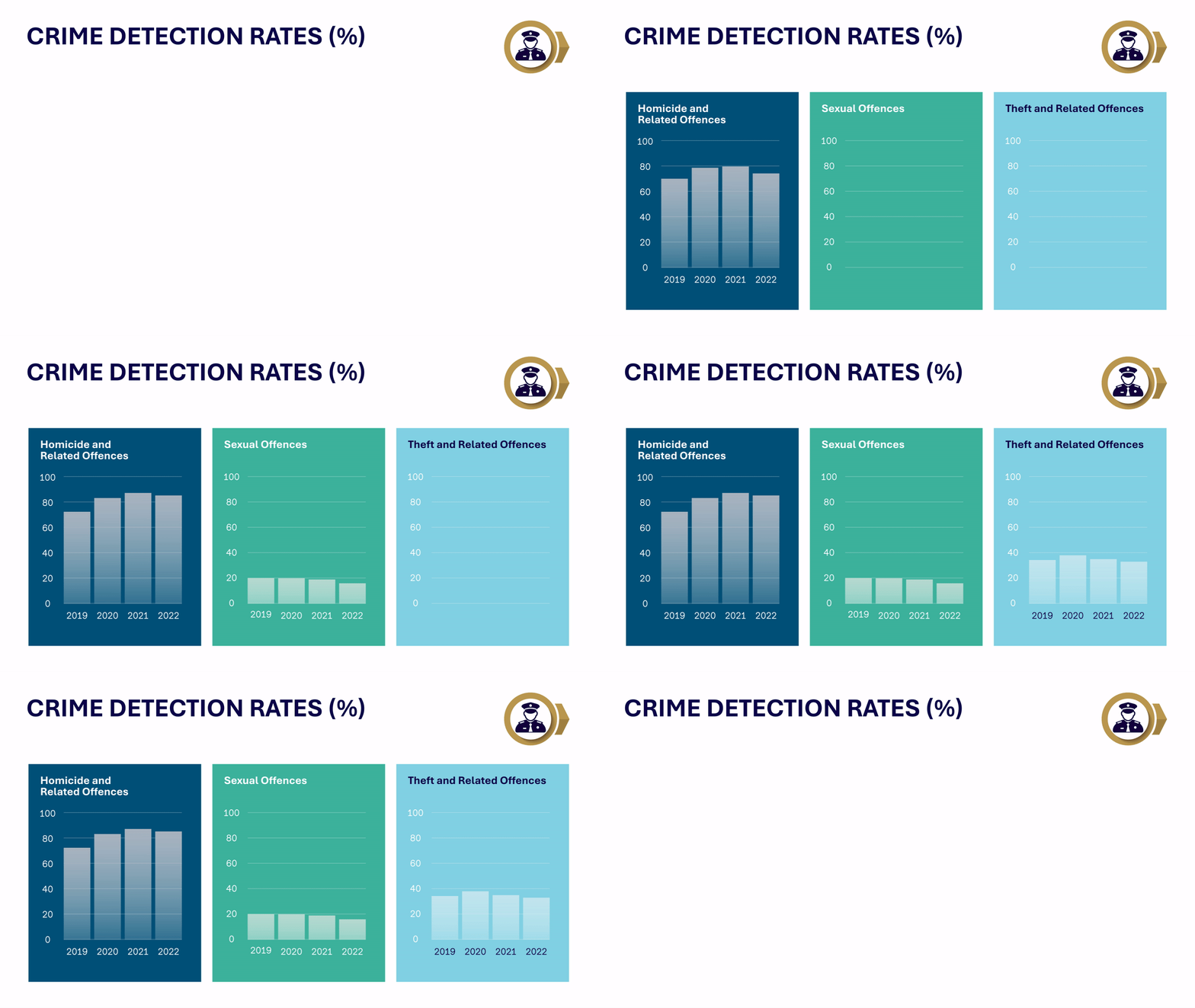
Cross-jurisdictional comparisons of detection rates are not possible due to methodological limitations, but the data for Ireland show clear differences across offence types during the period studied (2019-2023). Updated detection rates for homicide offences were high, ranging from 72% in 2019 to 83% in 2020, with an average of 82% between 2019 and 2022. Sexual offences recorded much lower detection rates. These ranged from a low of 16% in 2022 to a high of 20% in 2019 and 2020. Updated detection rates for theft offences ranged from 33% in 2022, to 38% in 2020 – averaging 35% between 2019 and 2022. Contextual factors that influence the variance between detection rates are referenced in the broader analysis. Traffic light indicator: White |
|
Traffic light indicators explainedA key feature of the methodology employed in this paper is the traffic-light assessment tool. This is a simple visual tool to assess and communicate Ireland’s performance under each justice indicator. The assessment and analyses are based on empirical data that have been collated from over 100 reputable sources. |
|
 |
Red traffic light: Ireland deviates by more than 10% from the European Union or Council of Europe average. |
 |
Amber traffic light: Ireland deviates by between 3% and 10% from the European Union or Council of Europe average. |
 |
Green traffic light: Ireland is on a par with, or deviates by up to 3% from, the European Union or Council of Europe average. |
 |
White traffic light: Available data are insufficient to make an informed assessment. |
|
Exceptions to this model are made where a deviation is clearly positive or negative. For example, higher public trust in the Gardaí is considered a positive outcome, even if it deviates by more than 10% from the EU average. |
|
Document downloadsThe figures above have been rounded for readability. More precise values are provided under each Justice Indicator in the main paper. You can also download the key findings as a print-friendly PDF. |